
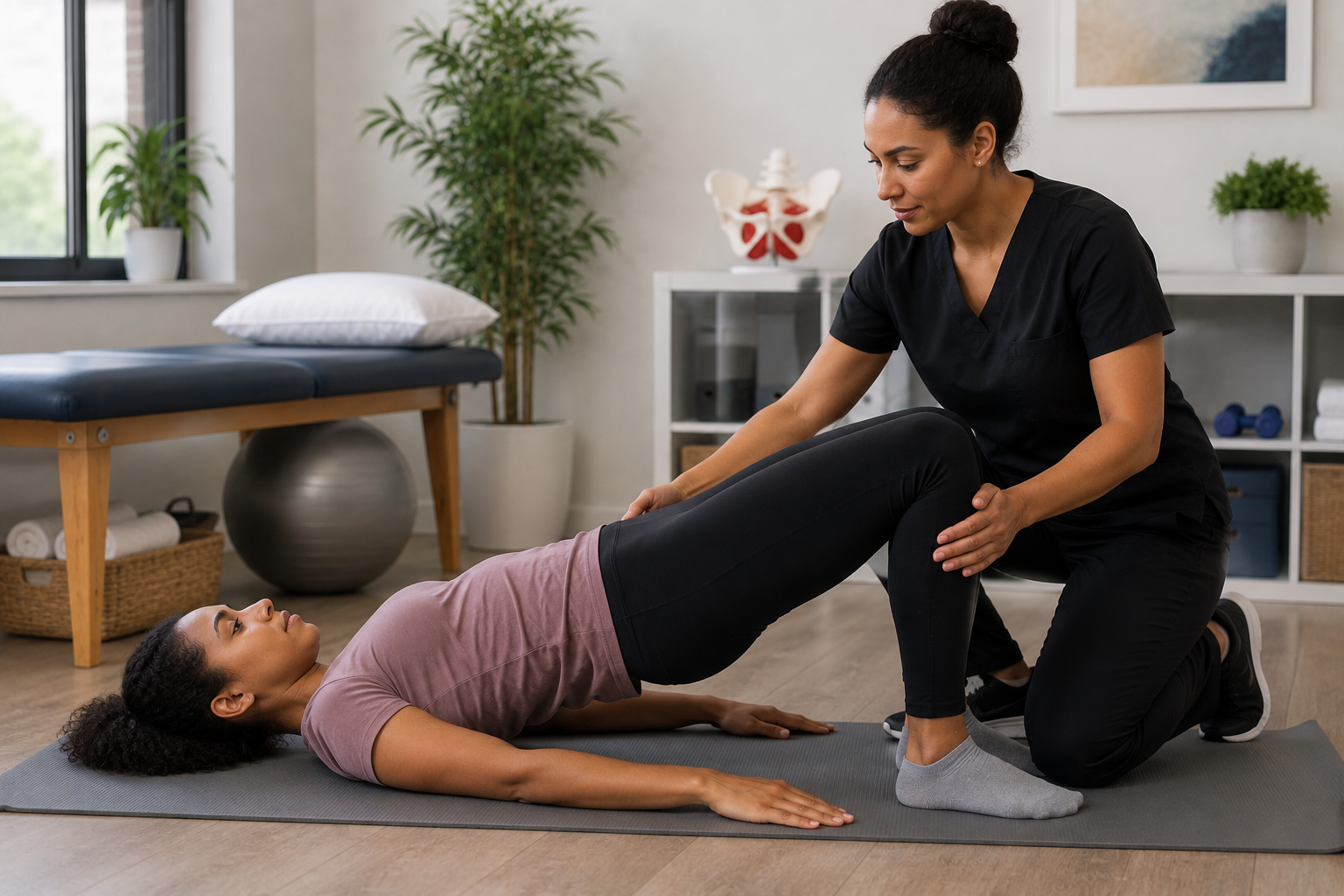
Pregnancy and delivery change your body in ways that don’t just disappear once your baby arrives. If you’re dealing with leaking when you sneeze, a heavy feeling in your pelvis, or pain during everyday movement, you’re not alone, and you don’t have to just live with it. Pelvic floor therapy is one of the most effective tools for postpartum recovery, and understanding how it works can help you decide if it’s right for you.
What Is Pelvic Floor Therapy?
Pelvic floor therapy is a specialized form of physical therapy that targets the muscles, ligaments, and connective tissue supporting your bladder, uterus, and bowel. These muscles stretch, weaken, and sometimes tear during pregnancy and childbirth. A trained therapist evaluates how well these muscles contract, relax, and coordinate, then builds a treatment plan around what your body actually needs.
Treatment often includes internal and external manual therapy, targeted strengthening exercises, breathing work, and posture correction. It’s not just Kegels. In fact, for many postpartum patients, learning to relax the pelvic floor matters just as much as learning to strengthen it.
How Does It Help With Postpartum Recovery?
Pelvic floor therapy speeds up postpartum recovery by retraining muscles that carried the weight of pregnancy and absorbed the stress of delivery. Whether you had a vaginal birth or a C-section, your pelvic floor supported your growing baby for nine months and needs guided rehabilitation afterward, not just time.
A therapist checks for common issues like diastasis recti (abdominal separation), scar tissue from tearing or episiotomy, and muscle weakness that can affect bladder control. Addressing these early, often within the first few months after delivery, tends to produce faster, more complete results than waiting until symptoms become chronic.
What Is Pelvic Floor Dysfunction, and How Common Is It After Birth?
Pelvic floor dysfunction happens when these muscles can’t properly contract or relax, leading to symptoms like urinary leakage, pelvic pain, or a feeling of pressure or heaviness. It’s extremely common after childbirth, though it’s often dismissed as something new moms just have to accept.
Signs of pelvic floor dysfunction include:
- Leaking urine when you laugh, cough, or exercise
- A dragging or bulging sensation in the pelvis
- Pain during intercourse
- Lower back or hip pain that started after delivery
- Difficulty fully emptying your bladder or bowels
None of these are things you need to push through indefinitely. A women’s health therapy program built around pelvic floor rehabilitation can identify the root cause and treat it directly.
When Should You Start Pelvic Floor Therapy After Delivery?
Many providers recommend starting an evaluation around six weeks postpartum, once your body has cleared initial healing milestones. That said, some symptoms, like sharp pain or significant leaking, warrant an earlier conversation with a specialist.
Early treatment matters because muscle patterns set in over time. The sooner a therapist can assess how your pelvic floor is functioning, the sooner you can start correcting imbalances before they become long-term habits.
What Results Can You Expect?
Most patients notice steady improvement over several weeks of consistent sessions and home exercises. Results vary based on the severity of symptoms, delivery type, and how consistently you follow your therapist’s plan, but common outcomes include reduced leakage, less pelvic pain, improved core stability, and a stronger sense of control over your body again.
Frequently Asked Questions
Is pelvic floor therapy only for women who had a vaginal birth?
No. C-section deliveries still place significant strain on the pelvic floor throughout pregnancy, and abdominal surgery can affect core and pelvic muscle coordination. Both delivery types benefit from evaluation.
How long does postpartum pelvic floor therapy usually take?
Many patients see noticeable improvement within 6 to 12 sessions, though timelines depend on your specific symptoms and how long they’ve been present. Your therapist will adjust the plan as you progress.
Does pelvic floor therapy hurt?
Sessions shouldn’t be painful. Some techniques address sensitive or tender areas, so mild discomfort is possible, but a good therapist works within your comfort level and adjusts as needed.
Ready to Feel Like Yourself Again?
Postpartum recovery doesn’t have to mean quietly living with pain, leakage, or discomfort. A personalized pelvic floor therapy plan can help you rebuild strength, restore function, and feel confident in your body again. Lotus Integrative Healthcare offers dedicated women’s health therapy for new moms in Edmonds. Contact us today to schedule your evaluation.
Posted on August 26, 2026 | Published by Ignite Local | Related Local Business